
● Ongoing
Zanzibar
Living lab · Experiment
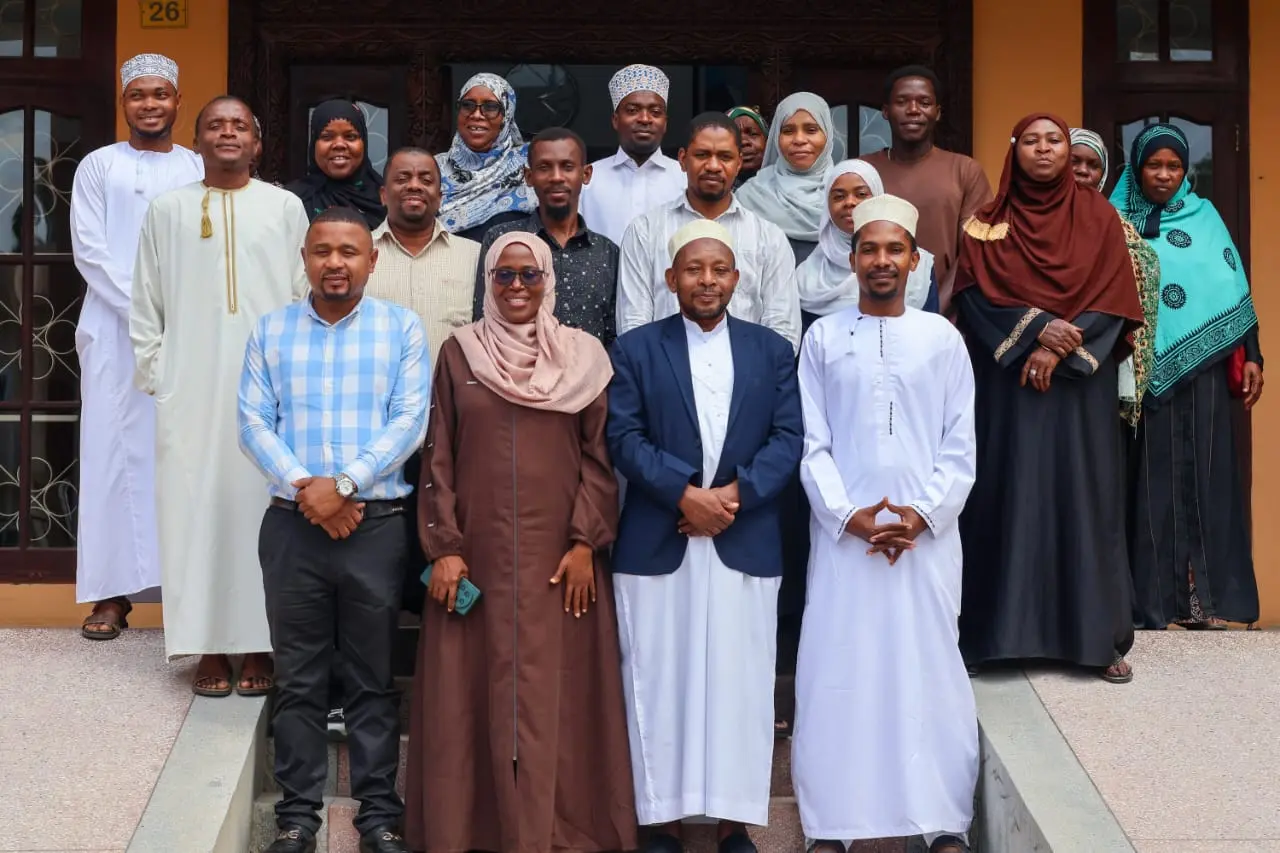
Resilience Academy for BLUE-ZAN
An eight-week student placement that turns Zanzibar’s coastal and marine data gaps into datasets, digital skills and a model the partners can run again on their own.
Run jointly by Resilience Academy, State University of Zanzibar and University of Turku.
Share…
Share on LinkedIn
Share on X
Share on Facebook
Share on WhatsApp
Share by email
Copy link
About the project
About this project
BLUE-ZAN — Increasing Climate Resilience of Zanzibar with integrated Marine Management and sustainable Blue Economy — is a Finnish Institutional Cooperation Instrument (ICI) project funded by the Ministry for Foreign Affairs of Finland and implemented by the Finnish Environment Institute (Syke) with Zanzibari partner institutions. Its outcome is strengthened management of coastal and marine resources and monitoring systems through an improved data value chain.
This project is the Tanzania Resilience Academy’s part of it: BLUE-ZAN Activity 3.2, Demonstrations of collaborative data collection and utilisation. Syke commissioned the University of Turku to deliver a complete RA internship cycle, and UTU works through the State University of Zanzibar (SUZA) and the Zanzibar Fisheries and Marine Resources Research Institute (ZAFIRI), together with the Department of Environment, the Zanzibar Environmental Management Authority and the Department of Marine Conservation.
The question behind it is a practical one. Zanzibar’s government institutions need current geospatial data on coastal and marine environments, and they need it at a cost they can carry after a project ends. The RA placement model answers both at once: groups of students do real, demand-driven data collection for a host institution, and come away with digital skills and the teamwork, community engagement and reporting practice that employers ask for. Nobody produces a dataset that is thrown away, and nobody trains on invented tasks.
The work runs in three phases across July 2026 to March 2027. First, co-design: partners agree the data needs, the intern roles and tasks, and a daily programme. Then the placement itself, an eight-week block from August to October 2026 with up to fifteen gender-balanced SUZA interns hosted by the government institutions, whose datasets are quality-controlled and published to the Climate Risk Database. Finally evaluation and institutionalisation, ending in practical guidelines so SUZA and the government departments can arrange these placements routinely rather than one project at a time.
UTU and SUZA hold a bilateral MoU valid to 2029, and both are founding members of the Tanzania Resilience Academy, whose own MoU runs 2022–2027. The intent is that what works here is upscaled from Zanzibar to Tanzania’s other coastal areas.
Objectives
- Establish a group-based student internship model between SUZA and the Zanzibar government institutions engaged in BLUE-ZAN (DoE, ZEMA, DMC and ZAFIRI)
- Capacitate the partner institutions to use the RA internship model for cost-effective, demand-driven digital geospatial data collection
- Produce geospatial datasets for the analysis and management of Zanzibar’s coastal and marine environments
- Co-design the placement: agree the data needs, intern roles and tasks, and a detailed daily programme (WP1)
- Run and supervise an eight-week placement for up to 15 gender-balanced SUZA interns, hosted by the government institutions (WP2)
- Quality-control, store and share the collected datasets in the Climate Risk Database (CRD)
- Evaluate the cycle and publish practical guidelines so SUZA and the government institutions can arrange future placements routinely (WP3)
Key activities
Project outputs
Impact, data & learning resources
📈
Impact & outcomes
The wider picture
How this project connects
Everything linked to this project, and what those links add up to.
Counted from the links below, not entered by hand — a person reached through several of them is counted once.
Programs1
-
 Industrial Training: BLUE-ZAN Aquaculture Atlas (Zanzibar, 2026)
The Programmes are by invitations, request to join if you are Interested in joining one?
Team Members5
-
 Niina Käyhkö
Project Leader & Principal Investigator University of Turku
-
 Msilikale Msilanga
Project Manager Resilience Academy
-
 Khairiya Masoud
Project Expert State University of Zanzibar
-
 Dr. Mary Khatib
Resilience Academy coordinator State University of Zanzibar
-
 Massoud Hamad
Project Expert State University of Zanzibar
Reports & publications
View all reports →Project partners
This project brings together 2 universities & research partners and 5 government agencies — 2 of the 4 sectors of our living lab.





Have a project in mind?
Partner with Resilience Academy to map hazards, open geospatial data and build resilience with communities across Tanzania.