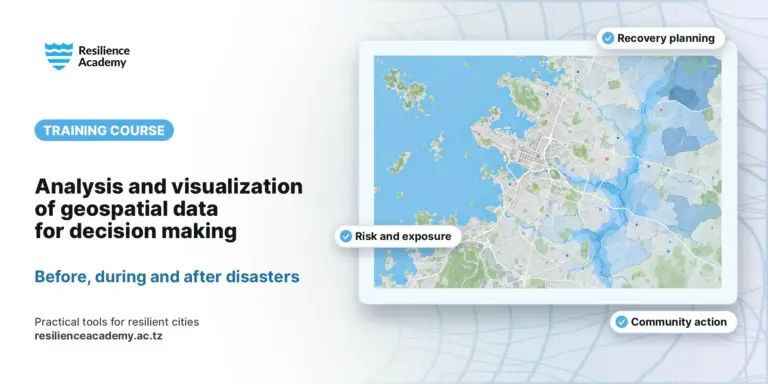

This introductory lecture explains, in plain language and with real examples from Tanzania and the Resilience Academy Climate Risk Database (CRD), why three connected disciplines matter for anyone who works with data: data quality (is it correct?), data management (is it kept usable?), and data sharing (can others find and reuse it?). Together, these turn a raw file on a laptop into a trusted public resource that supports urban-resilience decisions.
The session is grounded throughout in the Climate Risk Database, the open geospatial platform for Tanzania’s cities, using its real datasets — for example, the community-based flood and heat ‘experience’ layers for wards such as Kigogo and Tandale — to make each idea concrete. It reflects the Resilience Academy principle that local talent produces the local data that builds local resilience, and that curation is what keeps that data valuable over time.